
Front Yard Landscaping Solutions for Sloped or Uneven Lots in Rutland, MA

Many properties throughout Rutland, MA, sit on lots with noticeable grade change, whether from a gentle rise near the foundation or a more dramatic slope toward the street. None of that rules out a polished, well-organized front yard. It simply changes the approach.
A sloped front yard presents a different set of design questions than a flat one. Water runs where it wants, plantings struggle to establish on an incline, and a straight walkway to the front door can turn into an awkward climb. Rutland Nurseries designs front yard landscaping across Central Massachusetts that work with the natural grade of a property rather than fighting it.
A sloped lot, handled correctly, often ends up with more visual interest than a flat one, since the terrain itself creates natural focal points and layered planting opportunities.
This guide covers the retaining structures, plant choices, walkway strategies, and drainage solutions that turn a challenging slope into a front yard that feels intentional from the street to the front door.
Related: Front Yard Landscaping That Makes the Right Impression Before Anyone Reaches the Front Door
Understanding the Slope Before Designing Around It
Every sloped front yard design starts with an honest look at the grade itself. A slope that drops sharply away from the foundation calls for different solutions than one that rises toward the house. The direction water naturally travels across the property determines where erosion is likely to occur and where standing water tends to collect after a storm.
Soil type factors into this evaluation as well. Clay-heavy soil common in parts of Worcester County holds water longer and erodes differently than sandier soil, which affects both plant selection and the design of any retaining structures.
A grading assessment before any construction begins helps avoid a front yard that looks good for one season and then shows erosion damage or drainage problems the next, once the ground has had a full year of freeze and thaw cycles to test the original design.
Rutland Nurseries walks this evaluation with every client before proposing a design. Understanding where water moves, how steep the grade actually is, and what the soil can support prevents costly guesswork later in the project and gives the design team a clear picture of which structural solutions the property actually needs.
How Do Retaining Walls Help a Sloped Front Yard?
Retaining walls serve several functions in a sloped front yard, from structural support to shaping how the space looks from the street.
Creating Level Areas on a Slope
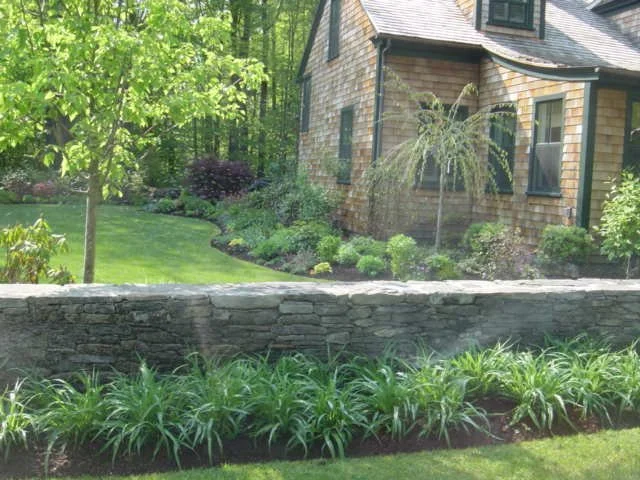
Retaining walls remain the most direct tool for managing a sloped front yard, since they physically hold soil in place and create level areas where none previously existed.
A single retaining wall near the front of the property can convert a steep drop-off into a level planting bed or a flat section of lawn, giving the eye a place to rest rather than following an uninterrupted slope from the street to the house.
Multiple shorter walls, terraced at intervals up the grade, often work better than one tall wall on a more dramatic slope. Terracing breaks the incline into manageable sections, each with its own planting opportunity, and reduces the structural demands placed on any single wall.
Choosing the Right Material
Material choice affects both function and appearance. Natural stone retaining walls suit the wooded, rural character common throughout Rutland, MA, while manufactured segmental block offers a cleaner, more uniform look for homes with a more contemporary front elevation.
Either material handles the structural demands of retaining soil when installed with proper base preparation and drainage behind the wall, which prevents water pressure from building up and compromising the structure over time.
Getting the Height Right
Height matters for front yard applications specifically. A retaining wall near the street or the front walkway should stay low enough to maintain sightlines and avoid a fortress-like appearance.
Taller retaining needs are better handled through a terraced series of shorter walls than one imposing structure at the front of the property.
Finishing the Wall With Cap Stones
Cap stones and wall coping deserve attention beyond their structural role. A properly capped retaining wall provides a usable ledge for seasonal container plantings or simply finishes the wall with a cleaner edge, which matters in a front yard where the wall sits in full view of the street and any visitor approaching the house.
Matching cap material to the wall body, rather than mixing an unrelated stone or block style, keeps the finished structure looking deliberate.
What Plantings Work Best on a Sloped Front Yard?
Plant selection for a slope differs from flat-ground planting because root systems need to hold soil in place while still establishing successfully on an incline.
Groundcover for Erosion Control
Groundcover plantings with spreading root systems stabilize soil on moderate slopes and reduce erosion between more structural elements like retaining walls or terraces.
These plantings fill in over a season or two and create a cohesive green base across the slope rather than leaving exposed soil vulnerable to washout during heavy rain.
Shrubs With Fibrous Root Systems
Shrubs with fibrous root systems anchor themselves into sloped soil more effectively than plants with a single deep taproot.
Layering shrubs at different points along the grade, rather than concentrating them at the top or bottom, distributes root structure across the entire slope and provides erosion control throughout the planting bed.
Ornamental Grasses for Drier Ground
Ornamental grasses handle sloped conditions well throughout Central Massachusetts, since their root systems spread laterally and their above-ground growth tolerates the drier conditions often found on an elevated section of a front yard.
Placing grasses along the upper portion of a slope, where water drains away faster, takes advantage of their tolerance for less consistent moisture.
Establishing Trees on an Incline
Trees planted on a slope need extra attention to root establishment. A newly planted tree on an incline benefits from a slightly modified planting technique, including a berm on the downhill side to direct water toward the root ball during establishment, since water naturally runs away from the trunk on sloped ground before the roots have had time to spread.
How Should a Front Walkway Be Designed on Uneven Terrain?
A front walkway on a sloped lot needs to balance a direct route to the door with a grade that remains comfortable and safe to walk.
Integrating Steps Into the Path
Steps integrated directly into the walkway handle steeper sections of a slope more safely than a continuous ramped surface, which can become slippery in wet or icy conditions common during a Central Massachusetts winter.
Breaking a long walkway into a series of shorter runs connected by steps, rather than one continuous incline, also gives the design natural resting points and visual interest along the path.
Curving the Route Across the Grade
Curving a walkway across a slope, rather than running it straight up or down the grade, reduces the steepness of any single section and creates a more gradual, comfortable ascent to the front door.
This approach works particularly well on lots where the house sits noticeably above or below street level, since a curved path can distribute the elevation change across a longer route.
Choosing Materials for Traction
Material selection for a sloped walkway should prioritize texture and traction. Natural stone with a textured surface, or pavers with a slip-resistant finish, provide better footing on an incline than smooth poured concrete, particularly once seasonal moisture or frost becomes a factor.
Lighting the Change in Elevation
Lighting along a sloped walkway carries added importance, since uneven terrain and grade changes are harder to navigate safely after dark.
Path lighting placed at each change in elevation, including the top and bottom of any steps, helps guests and homeowners see where the terrain shifts before they reach it.
Adding Handrails for Extra Support
Handrails or low wall borders alongside a stepped section of walkway provide additional support on a slope, particularly during winter months when ice can form on stone or paver surfaces.
A simple metal rail or a low stone wall running alongside the steps serves this function without dominating the overall design, and it gives the walkway a finished, considered appearance rather than looking like an afterthought added for safety alone.
What Drainage Solutions Prevent Erosion on a Sloped Front Yard?
Drainage planning determines whether a sloped front yard holds up over time or gradually erodes and requires ongoing repair.
Installing a French Drain
A French drain installed along the base of a slope intercepts water before it reaches the foundation or pools near the front walkway.
This type of drainage system directs water underground to a discharge point away from the house, which protects both the landscaping and the structure itself from water damage during heavy rain events common in New England.
Using Swales to Redirect Water
Swales, or shallow channels cut into the grade, redirect surface water across a slope without the need for underground piping.
A well-designed swale blends into the overall landscape design rather than looking like an obvious drainage feature, often planted with water-tolerant grasses or groundcover that thrive in the slightly wetter conditions the swale creates.
Reducing Runoff With Permeable Paving
Permeable paving materials reduce runoff volume on sloped hardscape areas like a front walkway or a small parking apron.
Allowing water to filter through the paving surface rather than running off as sheet flow reduces the erosion pressure on surrounding planting beds and softens the impact of heavy rainfall on the overall grade.
Choosing the Right Mulch
Mulch depth and type also play a role in erosion control on sloped planting beds. A heavier, coarser mulch stays in place better on an incline than fine, lightweight mulch, which washes downhill during significant rain events and leaves soil exposed at the top of the slope.
Softening Hardscape-to-Bed Transitions
Grading transitions between hardscape and planting areas also affect how well a drainage plan performs over time. A hard edge where a paved walkway meets an unplanted slope creates a natural channel for water to accelerate and cut into the soil.
Softening that transition with a planted buffer, or setting the walkway slightly recessed with a gravel border, slows water down before it reaches the surrounding beds and reduces the long-term maintenance a sloped front yard requires.
How Does a Sloped Front Yard Affect Overall Curb Appeal?
A sloped front yard, designed correctly, often creates more dimension and visual interest than a flat lot. Terraced planting beds give a front yard a sense of depth as the eye moves up or down the grade, something a flat property cannot replicate as naturally.
Sightlines from the street matter more on a sloped lot, since the elevation change affects how much of the house and landscaping is visible from different vantage points. A front yard design that accounts for these sightlines, positioning key plantings and hardscape features where they will be seen clearly from the road, makes the most of the natural terrain rather than working against it.
Consistency in materials across retaining walls, walkways, and any steps ties a terraced design together and prevents a sloped front yard from feeling like a collection of separate fixes rather than one cohesive landscape. Homeowners throughout Rutland, MA, Holden, MA, and the surrounding Worcester County towns have found that a well-executed sloped front yard becomes a defining feature of the property rather than a limitation to work around.
Seasonal plantings that carry color through spring, summer, and fall reinforce that sense of intention, giving the terraced levels something new to display as the year progresses rather than settling into a static, one-note appearance once the initial installation is complete.
Bringing the Design Together
A sloped or uneven front yard in Rutland, MA calls for a design approach built around the specific grade, soil, and drainage patterns of the property. Rutland Nurseries begins every sloped-lot project with a thorough site evaluation, then builds a plan around retaining structures, plant selection, walkway design, and drainage solutions suited to that particular slope.
Homeowners across Central Massachusetts have transformed challenging terrain into front yards that feel organized, safe to navigate, and visually engaging from the street. A slope does not need to be corrected or hidden. It can become the defining structure of a well-designed front yard.
For homeowners ready to address a sloped or uneven front yard, Rutland Nurseries offers design and installation services throughout Rutland, MA and the surrounding communities.
Contact Rutland Nurseries today to start planning a front yard built around the terrain you actually have, not the flat lot you might wish it were.
Related: Colorful Plantings to Brighten Up Your Front Yard in Wayland and Newton, MA
About the Author
Our custom design styles and planting options can reinvigorate your home’s entrance or revitalize your backyard. Whether you’re looking to add an outdoor kitchen or need the personal touch of estate ground maintenance, we stand behind our high level of service and expert workmanship.